Login
Shipping Country
Super CLEARANCE CAMPAIGN - Selected tools and accessories with Super Special prices! - CHECK HERE
READ MORE
Login
| Blade length | 180 mm |
| Overall length | 415 mm |
| Teeth | crosscut 30 TPI |
| Blade thickness | 0,2 mm |
| Kerf | 0,3 mm |
| Blade material | SK85 |
| Country of manufacture | Japan |
| In the box | saw with blade fitted, ready to use |
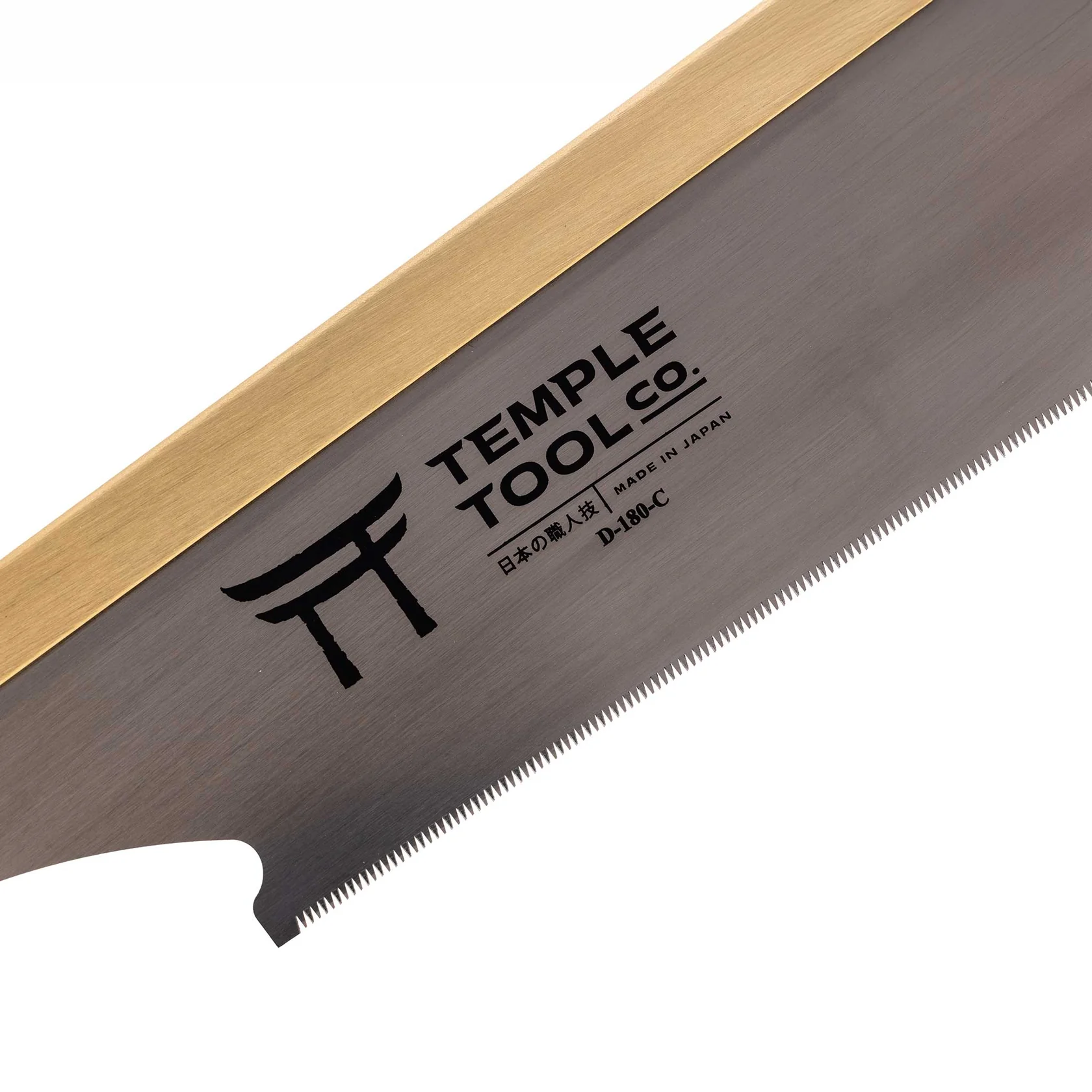
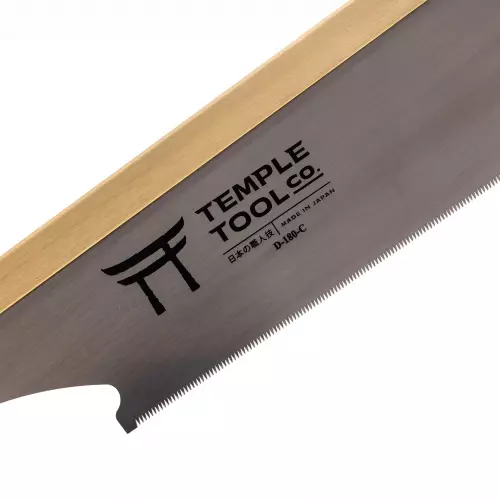
Rip teeth (Japanese tate-me) cut along the grain and work like a row of small chisels, lifting the shaving in the direction of the fibres. Crosscut teeth (yoko-me) are filed to a knife edge and sever the fibres before the material releases. The wrong tooth will still cut, but the surface tears and progress slows — crosscut teeth along the grain are sluggish, rip teeth across it tear the face.
The teeth are bent slightly to alternating sides. This is called set, and it makes the kerf wider than the blade so the blade cannot bind in the cut. On this saw the blade is 0,2 mm and the kerf 0,3 mm — the set widens the kerf by only 0,1 mm. For comparison, an ordinary hand saw often cuts a kerf over 1 mm wide.
The blade is Japanese SK85 carbon steel, with the tooth tips induction-hardened separately. That makes the tips considerably harder than the rest of the blade and multiplies service life — but it also means the teeth cannot be filed like those of a traditional saw. On a Japanese saw the blade is the consumable: when it dulls you change the blade, not the saw. The handle, back and hardware last for decades.
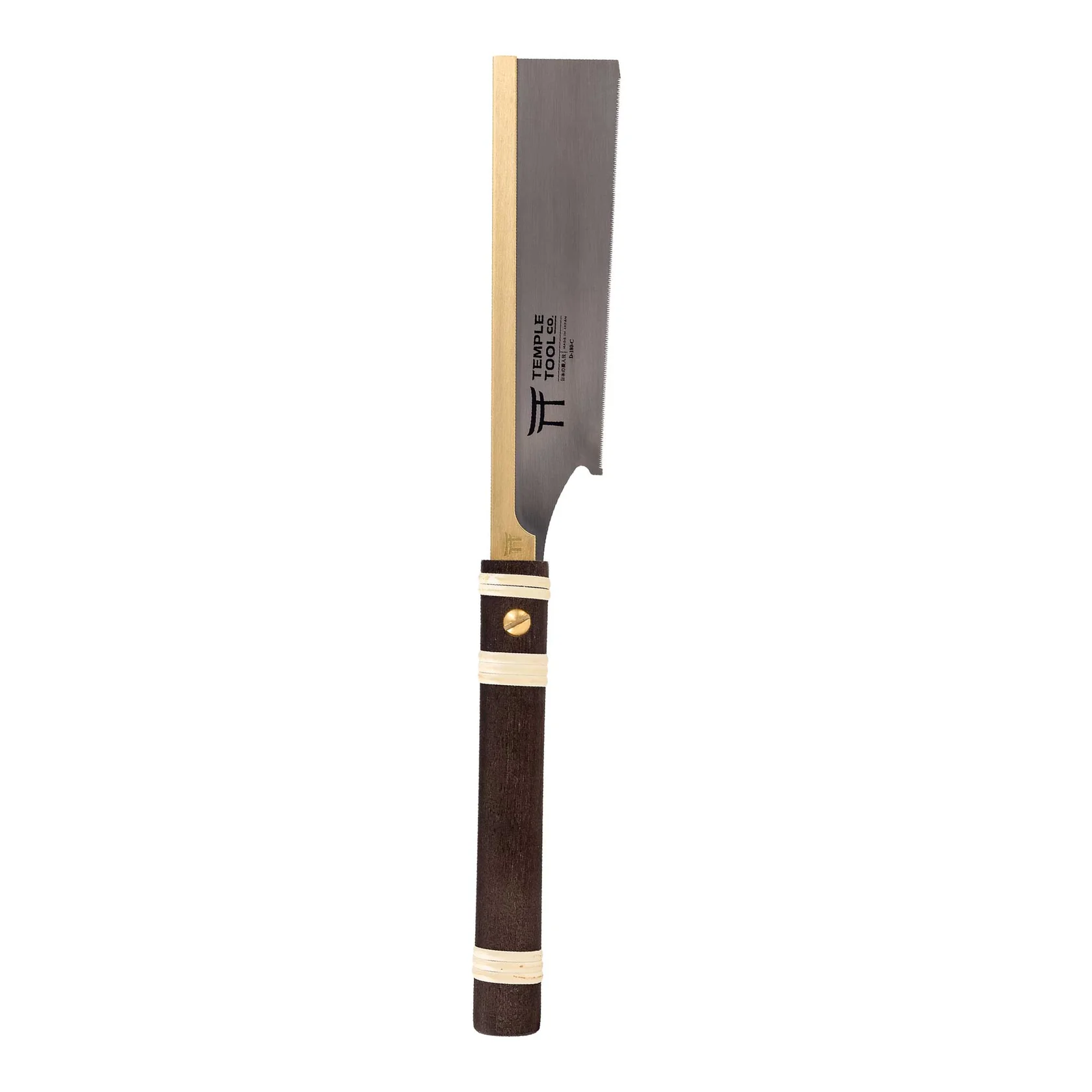
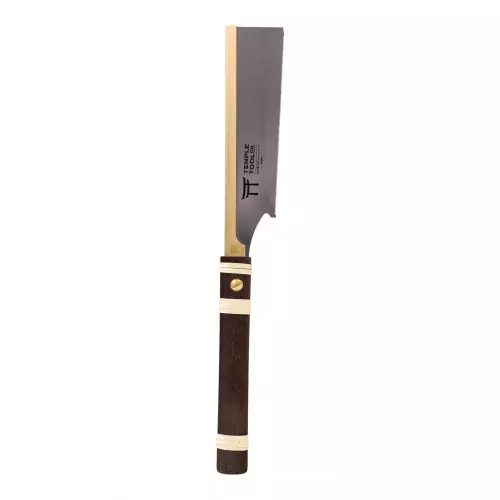
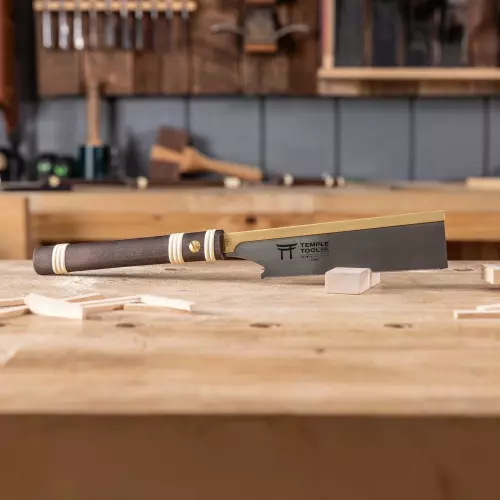
The handle is Japanese wingnut (Pterocarya, a relative of walnut), stained a rich dark brown and accented with natural rattan wraps. The rattan is not mere decoration: it gives a secure grip with damp hands and keeps the handle from splitting. The hardware is solid brass, and it is the brass that makes changing the blade quick.
The blade is a consumable. The replacement blade for this saw is TT-D-180CB — when the cut starts to tear or the saw needs force, change the blade, not the saw.
Wipe the blade dry after use and oil it lightly with camellia oil or another non-oxidising oil — carbon steel rusts quickly in a damp shop. Store the saw so the teeth touch nothing hard. Changing the blade takes a few minutes by releasing the brass hardware, with no special tools.
Temple Tool Co. was co-founded by two people. Chris Schoenberg is a full-time furniture maker known as Third Coast Craftsman. He used Japanese saws for close to a decade and designed them for other Japanese saw companies serving the US market before starting his own line. Takashi Morita has spent years bringing fine Japanese tools to customers around the world. The aim was to blend Western and Japanese craftsmanship, quality and design in one tool — and at the same time to describe Japanese tools honestly and accurately rather than building mystique around them. The saws are crafted in Japan.
Brand: Temple Tool
 You'll get 11.38 rewardpoints
The calculations are based on the Grenke leasing price list, which does not include insurance. Insurance is compulsory and the customer can either purchase their own insurance or take it out with the same contract. Leasing financing is only granted to companies with a valid business ID.
Lease period 12-72 months.
Leasing prices VAT 0.
Option to redeem at the end for your own final delivery price, which will be shown under the product and in the summary. The minimum final delivery price is 70€ VAT 0.
After placing an order with leasing financing, you will receive within 1-2 days by email the contracts for electronic signature.
If you wish to use your own insurance, the leasing company will require a certificate of insurance showing the following:

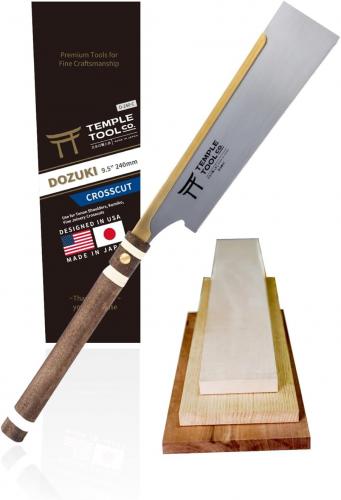
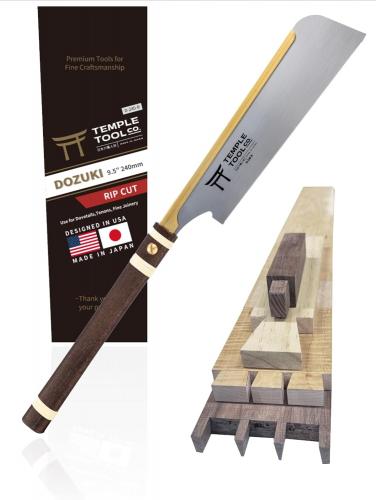
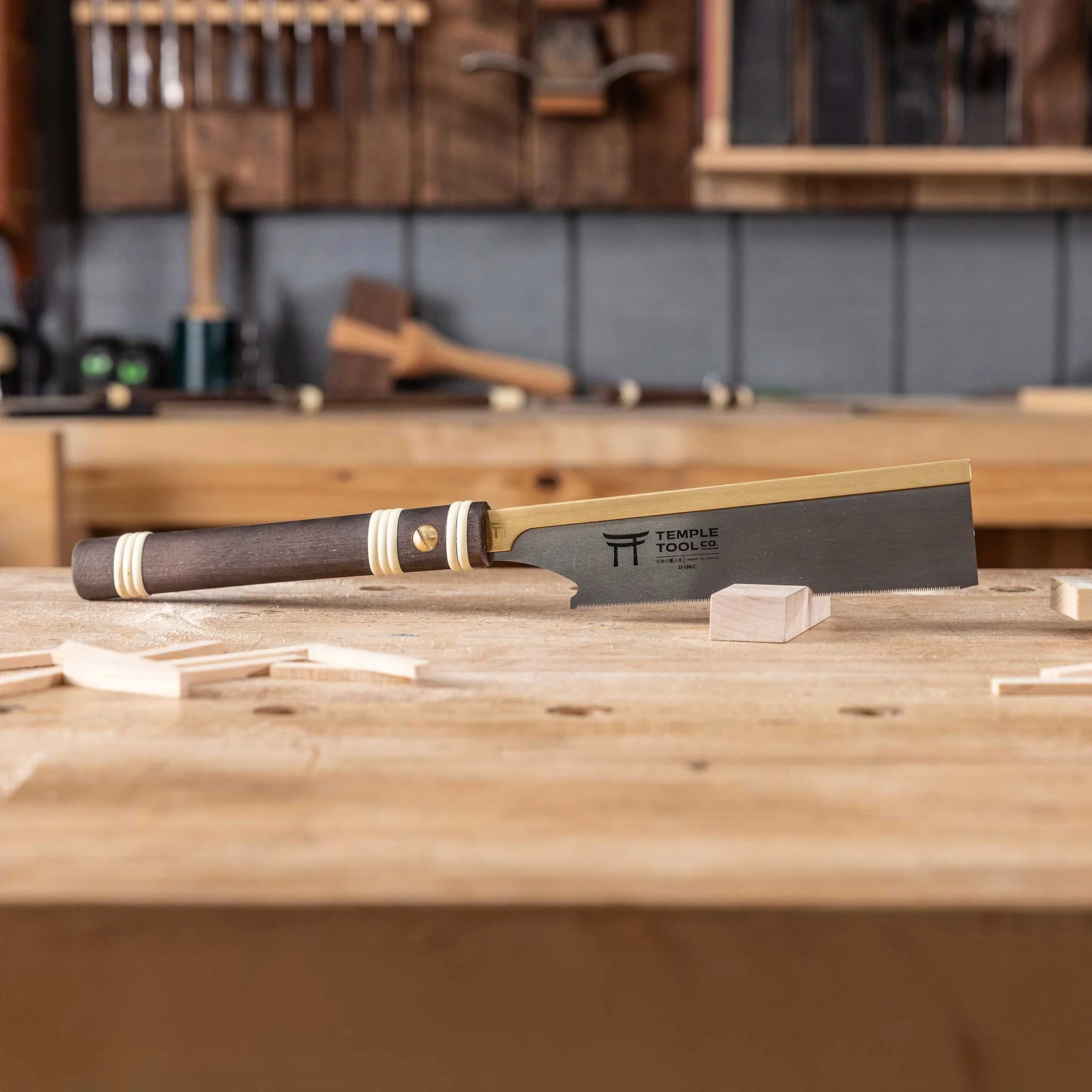
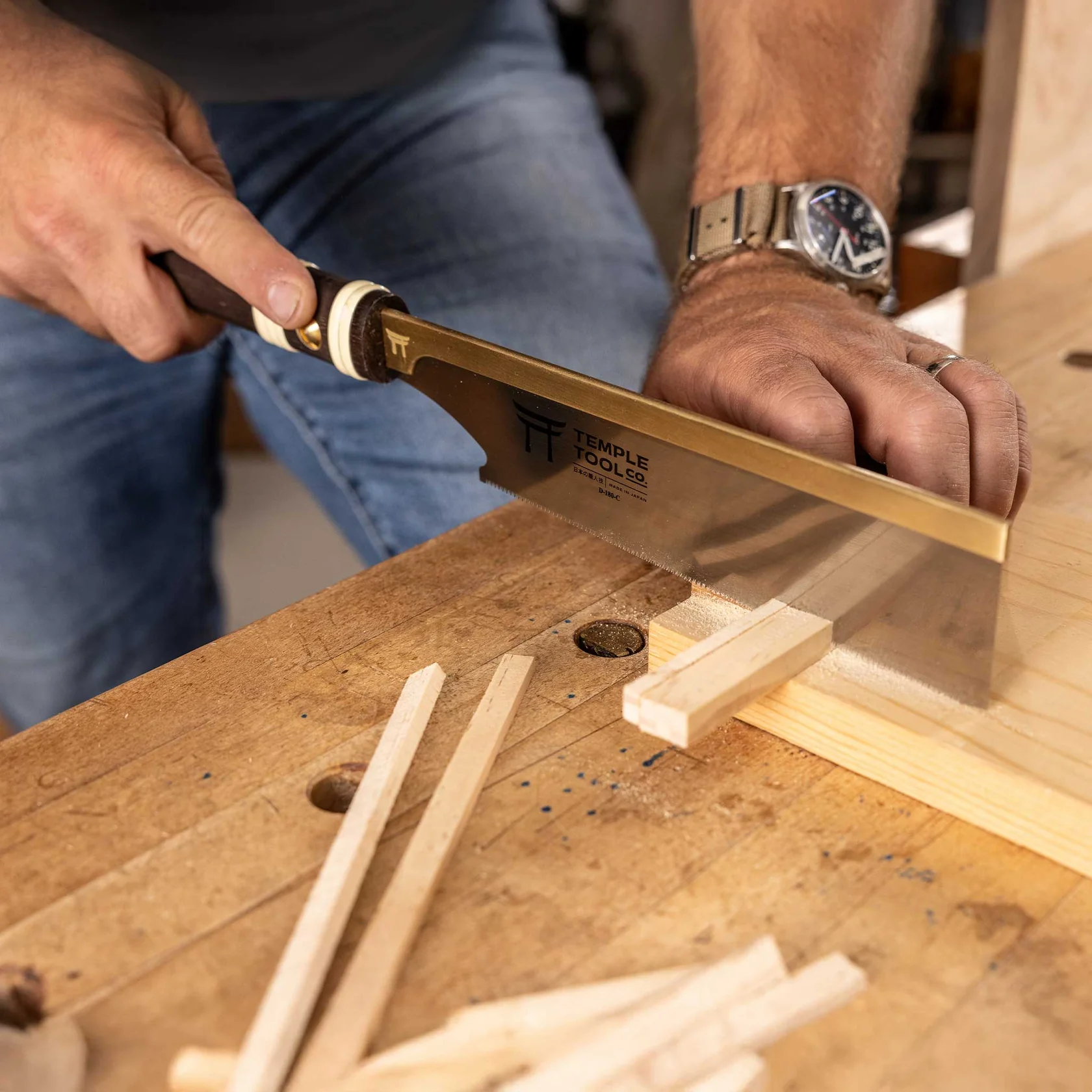
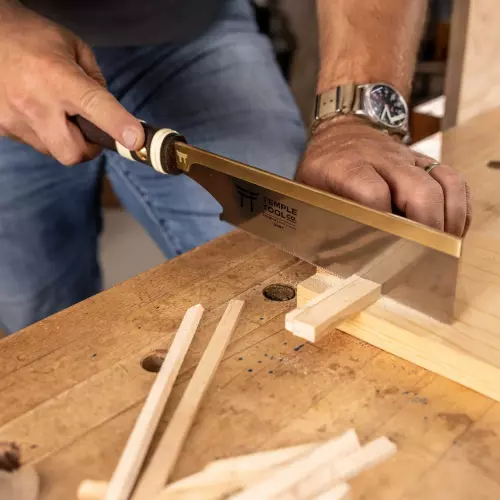
The thinnest and finest saw in the range: a 0.2 mm blade at 30 TPI. The kerf is only 0.3 mm wide, less than the line of many marking pens. This is the saw for kumiko and other work where joint clearance is measured in tenths of a millimetre.
A Western saw cuts on the push. Pushing puts the blade in compression, so it has to be thick enough not to buckle — and a thick blade leaves a wide kerf. A Japanese saw cuts on the pull stroke, which puts the blade in tension and keeps it straight even when it is paper-thin. That gives three advantages: a narrower kerf, less wasted material and markedly less effort. The precision is not a matter of style but a direct consequence of physics. The lower effort is also why a pull saw suits a beginner as well as a professional: a saw you never have to force is a saw that does not wander off the line.
A thin blade needs a light hand. Do not push — let the weight of the saw and the pull stroke do the work. Pressure bends a 0.2 mm blade, the kerf starts to wander and at worst the blade kinks. This is true of all Japanese saws, but of this one especially.
100% Trustworthy online store with history
Expert customer service
Fast deliveries
Large selection directly from stock
No middlemen - save on the price






 Suomeksi
 På Svenska
















 add to cart